


Can stepping-stone leagues offer a better path for a 19-year-old footballer: signing for a major club and barely playing, or choosing a lower-profile league where he can make thirty appearances a season?
The answer is: it depends. For a young player, maximising playing time in a challenging environment may be more beneficial to development than the prestige of the badge or even a better financial offer in the short term. In a world driven by data and statistics, playing every week for the right team at a young age can make a significant difference to a player’s visibility among potential clubs. This is where the idea of “stepping-stone leagues” comes from.
Stepping-stone leagues: different routes to the top
Portugal is one of the clearest examples of how stepping-stone leagues can work. Its leading clubs compete in European tournaments and have scouts working across the world. The model has almost become a tradition: sign players for relatively low fees, help them develop and sell them for a significant profit, sometimes as soon as six months later.
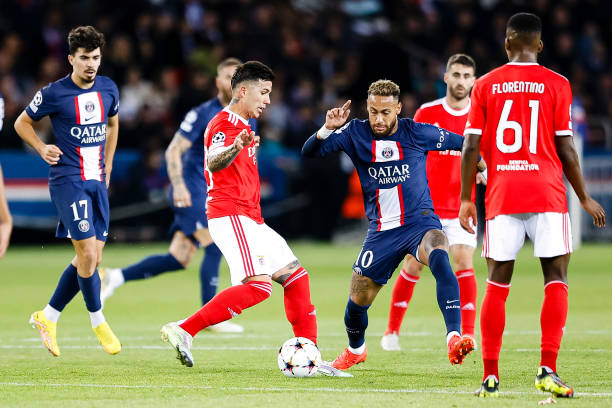
Enzo Fernández moved from River Plate to Benfica and joined Chelsea only six months later. Benfica initially agreed to pay €10 million, plus up to €8 million in add-ons, for 75% of his economic rights. His subsequent transfer to Chelsea was worth €121 million.
Luis Díaz took longer, but followed a similar route: he left Colombia, made a name for himself at Porto and eventually signed for Liverpool. Porto reportedly paid approximately €7 million to sign him from Junior de Barranquilla, while Liverpool agreed to an initial €45 million fee, with a further €15 million in potential add-ons.
Why did they not go directly to the Premier League? There is no single explanation for either transfer, but their routes illustrate the value an intermediate step can create. Playing in Portugal gave both players the opportunity to demonstrate their ability in European club football before moving to England. In Enzo’s case, his performances during Argentina’s 2022 World Cup victory also formed part of that period. Development, exposure and timing can all change how a player is assessed and what clubs are prepared to invest.
The second tiers of England, Germany and Spain can also function as stepping-stone leagues. They may not have the glamour of the Premier League, the Bundesliga or LaLiga, but they still offer genuine professional competition: demanding schedules, pressure to deliver results and no easy matches.
Jude Bellingham made his professional debut for Birmingham City at 16, completed a full season in the Championship and then moved directly to Borussia Dortmund. Pedri followed his own path through Spain’s second division with Las Palmas before joining Barcelona.
In Germany, Benjamin Pavard played in the 2. Bundesliga with Stuttgart, earned promotion with the club in 2017 and joined Bayern Munich in 2019 after two seasons in the top flight.

MLS also features among stepping-stone leagues, offering an increasingly common route to Europe. The league has grown financially, its academies have improved and it now attracts far more attention from international scouts than it did ten years ago, helped by the arrival of players from other markets. Alphonso Davies made his debut for Vancouver Whitecaps at 15 and was playing for Bayern Munich by the age of 18. Miguel Almirón also used MLS as a platform before moving from Atlanta United to Newcastle.

When the best contract is not the best move
Choosing a league because of its financial offer is a valid decision. Salary matters, but so do playing time, the level of competition, the player’s role within the team and the possibility of taking another step forward.
Jhon Durán’s case shows the risks involved. In January 2025, at the age of 21 and after impressing at Aston Villa, he joined Al-Nassr in a deal reportedly worth around $80 million. He scored 12 goals in 18 appearances in Saudi Arabia, but was later sent on loan to Fenerbahçe and Zenit. In just over a year, he changed clubs several times and struggled to maintain continuity.

His club situation also featured in explanations for his absence from the Colombian national team. In March 2026, Néstor Lorenzo noted that the striker was playing fewer minutes and had struggled to adapt after changing clubs. Durán was subsequently included in Colombia’s preliminary squad for the 2026 World Cup, but did not make the final 26-player list.
It would be unfair to claim that he missed the World Cup solely because he chose to move to Saudi Arabia. However, his career path shows that a major financial improvement does not always lead to sporting growth.
Sousa FA’s Perspective
For an agent, the value of stepping-stone leagues depends on what they can offer a player at a particular stage of his career.The right environment can put a player on an upward trajectory in both performance and market value.
Some clubs understand this and build successful business models around it. If the objective is to develop players and increase their value, the ownership, sporting director and coaching staff need to be aligned. That means giving the right players suitable roles, opportunities to compete and the visibility to attract interest. When several clubs within the same league follow that approach, the competition can become a centre for developing talent.
Agents can support both players and clubs throughout this process, help with adaptation and identify when the time is right for a transfer and the next step. Contract length, potential exit terms and the club’s willingness to negotiate all form part of career planning.
We believe an intermediate step should have a clear purpose. The agent’s role is to help time each move according to the player’s professional development and personal circumstances.


